General Information
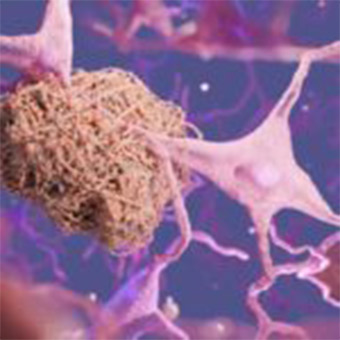
Creutzfeldt‐Jakob disease (CJD) is one of many different prion diseases. A prion is a type of protein that can cause normal proteins in the brain to fold abnormally (Johns Hopkins 2024). CJD is neurodegenerative disorder, meaning it attacks brain function. Unfortunately, CJD progresses quickly and is always fatal (CDC Clinical Overview 2024). Prion diseases, also called transmissible spongiform encephalopathies (TSEs) like CJD, can affect both humans and animals. Fortunately, prion diseases are very rare. Unlike bacteria and viruses, prions lack genetic material like DNA and RNA and so eradicating them from the environment & surgical instrumentation is uniquely challenging if they are contaminated with highly infective tissues (such as brain [including dura mater], spinal cord, eye and pituitary).
What causes & prevents Creutzfeldt‐Jakob disease?
CJD transmission is not fully understood. People can inherit CJD (familial CJD), but it also occurs sporadically without known risk factors. Acquired CJD, however, is caused by exposure to infected tissues during medical procedures and is the primary concern of healthcare infection prevention & control professionals.
Communication and preparation are vitally important when an operation or invasive procedure (including autopsy) on a suspect CJD patient. Communication between neurology, neurosurgical teams, operating room staff, sterile processing, pathology, laboratory, infection prevention & environmental services departments is critical. Most North American healthcare facilities will have policies & procedures in place for all suspect and confirmed CJD and prion disease cases. Additionally, when healthcare teams communicate prior to procedures or surgeries on suspect CJD cases, additional protection of the environment (e.g., surface covers, plastic barriers, etc.) can be utilized to minimize contamination with infectious tissues (WHO 1999).
CJD is not the same as “Mad Cow” disease. CJD is commonly confused with variant CJD (vCJD) given similar names. vCJD occurs when persons consume infected beef (“Mad Cow”). Per CDC, vCJD affects younger people and is associated with mental symptoms and behaviors that do not occur with classic CJD.
Are environmental surfaces a concern?
To date, there is no scientific evidence of transmission from touching environmental surfaces. While CJD can spread from person to person, it is not highly contagious. The highest risk comes from contaminated neurosurgical instruments that have not been correctly reprocessed and are subsequently used on other patients. Outside of operating rooms, laboratories and autopsy areas where high-risk tissue exposure could occur, routine cleaning and disinfection procedures and standard precautions are sufficient (CDC 2019).
The CDC’s Guidelines for Environmental Infection Control in Healthcare Facilities (https://www.cdc.gov/infectioncontrol/pdf/guidelines/environmental-guidelines-P.pdf) recognize that the research is not entirely clear on how to feasibly disinfect surfaces in areas that may be contaminated with high-risk tissues. Flooding surfaces for 30 minutes to an hour can be challenging in healthcare, and the recommended chemicals have poor safety ratings, may cause surface corrosion & damage, and require very safe handling. Below we provide considerations from several sources to guide environmental hygiene decision-making.
Considerations for environmental cleaning & disinfection (the following considerations do not apply to surgical instrument reprocessing)
To date, there are no EPA (US) or DIN (Canada) registered products to kill or inactivate prions. In fact, there is no test method to do so. The majority of current data suggests that extraordinary disinfection measures are only needed when environmental surfaces are contaminated with high-risk tissues.
As with all disinfection strategies, cleaning is an extremely important part of the disinfection process. Effective cleaning can physically remove large numbers of microorganisms and bioburden from environmental surfaces. Ideally, surfaces & equipment will be protected, as noted above, when CJD is suspected. Cleaning & routine disinfection can be performed per facility protocol with an EPA-registered one-step cleaner disinfectant, like Oxivir®.
For high-risk tissue contamination, several approaches have been proposed. A multidisciplinary team (noted above) should conduct a facility-based risk assessment and determine the best possible approach for high-risk CJD environmental surface disinfection. Below are several approaches, beginning with the most challenging and ending with the most practical:
1999 WHO recommendation for hard surface decontamination
- Clean visible soil from surfaces.
- Flood with a 2N NaOH (sodium hydroxide) or an undiluted sodium hypochlorite solution followed by a wet dwell time of 1 hour.
- All surfaces should be then wiped to remove excess solution, followed by a rinse with water.
- The WHO guidance does not address whether the surfaces have been contaminated with high-risk infectious tissues (brain [including dura mater], spinal cord, eye and pituitary).
AORN 2020 Environmental Cleaning Guidelines, Special Pathogens, CJD
- Use special cleaning procedures for environmental contamination with high-risk tissue (i.e., brain, spinal cord, eye tissue, pituitary tissue) from a patient who is diagnosed with or suspected of having CJD.
- Before the operation or procedure, minimize unnecessary equipment in the room. Cover/protect surfaces, as noted above.
- Clean noncritical environmental surfaces contaminated with high-risk tissue with a detergent and then decontaminate with a solution of either sodium hypochlorite (1:5 to 1:10 dilution with 10,000 ppm to 20,000 ppm available chlorine) or sodium hydroxide (1N NaOH), depending on surface compatibility.
- Perform cleaning & disinfection of surfaces contaminated with high-risk tissues in the following order:
- Remove the gross tissue from the surface.
- Clean the area with a detergent solution.
- Apply the disinfectant solution for a contact time of 30 minutes to 1 hour.
- Use an absorbent material to soak up the solution.
- Discard the cleaning material in an appropriate waste container.
- Rinse the treated surface thoroughly with water.
CDC Guidelines for Environmental Infection Control in Healthcare Facilities [2019 update]
- High-risk tissue contaminated surfaces should be decontaminated by:
- removing most of the tissue or body substance with absorbent materials,
- wetting the surface with a sodium hypochlorite solution containing ≥5,000 ppm or a 1 N NaOH solution, and
- rinsing thoroughly.
- Note CDC does not specific contact/wet/dwell time. They state, “factors to consider before cleaning a potentially contaminated surface are:
- the degree to which gross tissue/body substance contamination can be effectively removed and
- b. the ease with which the surface can be cleaned.”
2010 SHEA Guideline for Disinfection and Sterilization of Prion-Contaminated Medical Instrument (Rutala & Weber)
- Noncritical environmental surfaces (e.g., laboratory surfaces) contaminated with high-risk tissues (e.g., brain tissue) should be cleaned and then spot decontaminated with a 1:5 to 1:10 dilution of hypochlorite solutions, ideally for a contact time of at least 15 minutes.
- Environmental surfaces contaminated with low-risk tissues from high-risk patients require only standard disinfection. Since noncritical surfaces are not involved in disease transmission, the normal exposure time ( ^ 1 minute) is recommended.
Remember that any disinfectants used in healthcare should have EPA (US) or DIN (Canada) registration identification numbers on the label, despite not having a specific prion claim. There are many commercially available bleach concentrates that are not registered as disinfectants.
Refer to the WHO CJD as well as the CDC regarding the management of surgical instruments that have been used during surgical procedures which there is a suspicion of CJD or other prion diseases.
Diversey portfolio options
Unlike most disinfectant technologies, hydrogen peroxide disinfectants using AHP Technology are very effective cleaners (in accordance with CGSB 2:16‐87 and ASTM 4488‐89, 5343 test methods). AHP Technology disinfectants, which use Hydrogen Peroxide at a concentration of 0.5% as the active ingredient, can be used as the cleaner (lifts and removes soil load and pathogens) in high-risk decontamination and as a cleaner and disinfectant in accordance with the infection control recommendations for cleaning and disinfection of low to no risk surfaces.
For high-risk contaminated surfaces that cannot withstand very high sodium hypochlorite or sodium hydroxide concentrations, Avert single use prewetted wipes exceed the 10,000 ppm recommendation in AORN, and also exceed a 1:10 ratio described by Rutala & Weber (2010). Note that Diversey does not currently manufacture an EPA-registered sodium hypochlorite or sodium hydroxide concentrate product.
As with any special pathogen cleaning & disinfection, adjunct disinfection methods (UV-C) may be considered to supplement manual cleaning and disinfection. Typically, special pathogen cases may be scheduled later in the day, or even as the last case, to allow adequate time for cleaning and disinfection.
References
AORN. Guideline for environmental cleaning. Guidelines for perioperative practice. 2020. Available at www.aornguidelines.org. Accessed May 31, 2024.
- https://www.hopkinsmedicine.org/health/conditions-and-diseases/prion-diseases
- https://www.cdc.gov/creutzfeldt-jakob/hcp/clinical-overview/index.html
- https://www.ninds.nih.gov/Disorders/Patient-Caregiver-Education/Fact-Sheets/Creutzfeldt-Jakob-Disease-Fact-Sheet
- https://www.cdc.gov/prions/cjd/infection-control.html
- https://www.who.int/csr/resources/publications/bse/WHO_CDS_CSR_APH_2000_3/en/
- CDC 2019 HICPAC Guidelines for Environmental Infection Control in Healthcare Facilities. https://www.cdc.gov/infectioncontrol/pdf/guidelines/environmental-guidelines-P.pdf
- Rutala WA, Weber DJ. Guideline for Disinfection and Sterilization of Prion-Contaminated Medical Instruments. Infection Control & Hospital Epidemiology. 2010;31(2):107-117. doi:10.1086/650197