General Description
Human metapneumovirus (HMPV) can cause upper and lower respiratory disease in people of all ages, especially among young children, older adults, and people with weakened immune systems. Discovered in 2001, HMPV is in the Pneumoviridae family along with respiratory syncytial virus (RSV). Broader use of molecular diagnostic testing has increased identification and awareness of HMPV as an important cause of upper and lower respiratory infection.
Significance
HMPV is a common respiratory virus that circulates in many countries winter through to spring, although not all countries routinely test and publish data on HMPV. While some cases can be hospitalized with bronchitis or pneumonia, most people infected with HMPV have mild upper respiratory symptoms similar to the common cold and recover after a few days. Coinfection with other respiratory viruses is common for HMPV, so a person with a respiratory infection may test positive for influenza or rhinovirus and may also be infected with HMPV. There is some evidence that severe cases of HMPV occur more frequently when people are coinfected with other respiratory viruses.
Unlike SARS-CoV-2 (the virus that causes COVID-19 disease), HMPV is not a novel virus, so the healthcare system is familiar with how to test for and treat the disease. The general population has substantial immunity from prior infection, with most people (>90%) exposed to the virus by the age of 5 and routinely after that age, which is why subsequent infections are typically mild unless the person has comorbidities.
In early 2025, there was international interest in a potential increase of HMPV in China, but recent reports indicate overall rates are in keeping with rates seen in other years and no outbreak has been declared.
Symptoms
Symptoms commonly associated with HMPV include:
- Cough
- Fever
- Nasal congestion
- Shortness of breath
Clinical symptoms of HMPV infection may progress to bronchitis or pneumonia. The estimated incubation period is 3 to 6 days, and the median duration of illness can vary depending upon severity but is similar to other viral respiratory infections.
Transmission
The virus is believed to be spread primarily by respiratory secretions from infected people:
- Through the air by coughing, sneezing, talking, yelling, and singing
- Through close contact with an infected person, such as by touching, shaking hands, or intimate contact
- Through hand contamination by touching surfaces or objects that have the virus on them and then
touching your mouth, nose, or eyes
In the US, the CDC conducts surveillance on HMPV through the National Respiratory and Enteric Virus Surveillance System (NREVSS) and in Canada, the Public Health Agency of Canada conducts surveillance through the Canadian Respiratory Virus Surveillance Report.
Diagnosis
Healthcare professionals should consider HMPV testing during winter and spring, especially when HMPV is commonly circulating. Infection with HMPV can be confirmed usually by direct detection of viral genome by nucleic acid amplification test (NAAT), and direct detection of viral antigens in respiratory secretions using immunofluorescence or enzyme immunoassay.
Prevention
Precautions recommended to prevent transmission include:
- Frequent handwashing using soap and water or the use of alcohol-based hand rub if hands are not
visibly soiled
- Avoiding touching your face (eyes, mouth, and nose), especially with unwashed hands
- Avoiding close contact with people who are sick
- Wearing of a high-quality mask when in proximity to sick people or when in crowded conditions
- Cleaning and disinfection of potentially contaminated surfaces
People who display cold-like symptoms should:
- Cover their nose and mouth with a disposable tissue when sneezing or coughing
- Wash their hands frequently with soap and water for at least 20 seconds or use alcohol-based hand rub
if the hands are not visibly soiled
- Avoid sharing cups and eating utensils with other people
- Refrain from intimate contact with others
- Stay at home when sick
Environmental Cleaning and Disinfection
Diligent and frequent cleaning and disinfection of environmental surfaces is a core strategy for the prevention and control of all infections. HMPV is a large, enveloped virus, therefore, easy to inactive on environmental surfaces using an EPA or DIN approved disinfectant for use in healthcare or one that has been tested for efficacy against HMPV. Clean and disinfect frequently touched environmental surfaces and shared equipment.
Specific disinfectant efficacy claims for HMPV may not be commonly available on EPA or DIN-registered products. HMPV is not uniquely addressed in CDC’s Environmental Infection Control Guidelines. Therefore, standard cleaning and disinfection procedures should be followed, with attention to label claims for enveloped viruses (like influenza, Hepatitis B and HIV). Be sure to check if different dilutions and contact/wet times are required for enveloped viruses.
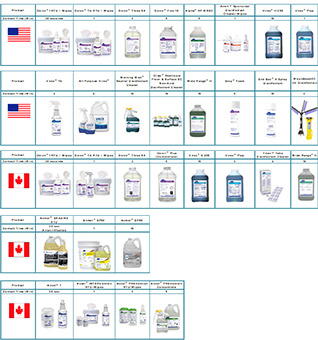
Diversey portfolio options are listed in the table below. For pathogen efficacy questions, contact your disinfectant manufacturer.
References:
https://www.cdc.gov/human-metapneumovirus/about/index.html#cdc_disease_basics_res-resources
https://www.cdc.gov/nrevss/php/dashboard/index.html
https://health-infobase.canada.ca/respiratory-virus-surveillance/laboratory.html
https://www.who.int/emergencies/disease-outbreak-news/item/2025-DON550