Biofilms: More Dangerous Than They Seem
Biofilms are communities of bacteria, fungi and yeasts that attach to surfaces and build a protective matrix that routine cleaning cannot remove.
Although often overlooked due to being invisible to the naked eye, biofilms represent one of the greatest threats to food safety and the integrity of industrial processes. Found everywhere from drains to equipment surfaces, these microbial communities are protected by an extracellular matrix that allows them to survive, persist, and contaminate—even in environments with frequent cleaning.
The persistence and resistance of biofilms make them a central concern in sectors such as meat processing, dairy, processed vegetables, beverages, baked goods, and even pharmaceuticals [1].
What Are Biofilms?
Biofilms are complex structures formed by populations of microorganisms (bacteria, fungi, yeasts) adhered to living or inert surfaces and embedded in an extracellular matrix composed primarily of polysaccharides, proteins, lipids, and extracellular DNA [2].
This matrix acts as a "biological shield" and is a microbial protection strategy, significantly hindering the penetration of cleaning agents and granting up to 1,000 times more resistance compared to their free-floating (planktonic) form [3].
Did You Know?
It is estimated that 80% of chronic microbial infections in humans are associated with biofilms, such as those involving catheters, implants, and respiratory mucosa [4].
In industrial settings, this same adhesion power enables pathogens to persist for months, even after regular cleaning cycles [5].
How do biofilms form? The 5 stages.
Though they may seem simple, biofilms follow a highly structured life cycle. Understanding this cycle is essential to know when to intervene most effectively—and to prevent the invisible enemy from settling in [6].
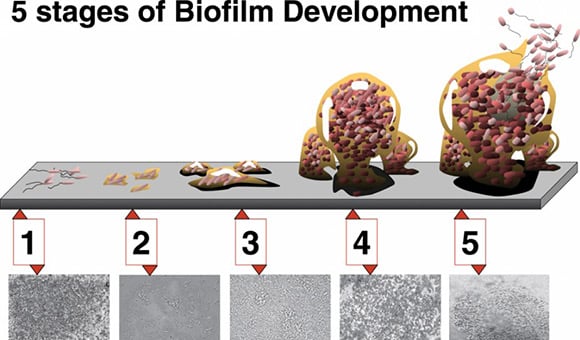
Figure1. Source: Monroe D (2007) Looking for Chinks in the Armor of Bacterial Biofilms. PLoS Biol 5(11): e307. doi:10.1371/journal.pbio.0050307
Stage 1: Reversible Adhesion (0 to 2 hours)
In this phase, free-floating bacterial cells (planktonic) approach and weakly attach to the surface through physicochemical forces such as hydrophobicity and Van der Waals forces.
They can still be removed by rinsing or water flow. This is the best window for prevention.
Stage 2: Irreversible Adhesion (2 to 6 hours)
Bacteria begin producing fimbriae, pili, and start synthesizing the extracellular matrix, permanently attaching to the surface.
From this point, simple cleaning is no longer sufficient. Mechanical action plus specific detergent is required.
Stage 3: Microcolony Formation (6 to 24 hours)
Adhered bacteria rapidly multiply and start communicating via quorum sensing, increasing matrix production.
This is the stage when resistance to cleaning and sanitization starts to increase, and conventional environmental monitoring may underestimate microbial contamination.
Antimicrobial actions must be combined and validated.
Stage 4: Biofilm Maturation (1 to 3 days or more)
A complex three-dimensional structure forms, with internal channels and protective layers. Nutrients and oxygen circulate inside the matrix. Cells can enter a VBNC (Viable But Non-Culturable) state, invisible to conventional tests. Extremely high resistance requires validated, specific anti-biofilm protocols.
Stage 5: Dispersion (continuous from day 3 onward)
The biofilm begins to release cells, which can colonize new areas and cause secondary contaminations, even in apparently clean zones. The cycle restarts — and contamination spreads silently.
Summary of the 5 Stages of Biofilm Formation
|
Stage |
Name |
Estimated Time |
Characteristics |
Recommended Intervention |
|
1 |
Reversible Adhesion |
0–2 hours |
Weak attachment, no matrix |
Simple rinsing, water flow |
|
2 |
Irreversible Adhesion |
2–6 hours |
Initial matrix formation, permanent attachment |
Cleaning with mechanical action and alkaline or chlorinated alkaline detergent |
|
3 |
Microcolony Formation |
6–24 hours |
Cell multiplication, onset of resistance |
Validated sanitization + mechanical action |
|
4 |
Biofilm Maturation |
24–72 hours or more |
Complex architecture, channels, high resistance, VBNC cells |
Combination: detergent + disinfectant + mechanical action |
|
5 |
Dispersion |
From 72 hours |
Cells detach and recontaminate new surfaces |
Continuous prevention, inspections, and chemical control |
Figure 2. Source: Own elaboration based on [1], [2], [3], [6], and [8]
Timeframes may vary depending on microorganism species and environmental conditions.
Where do biofilms hide?
- Drains and channels
- Cracks, welds, and porous points on equipment
- Walls of tanks and pipelines
- Rubber joints, threads, and valves
- Evaporators, chillers, cooling tunnels
Even with regular cleaning, biofilms can persist for weeks or months in moist and difficult-to-clean environments [7].
Did you know?
After biofilm formation, microorganisms present may become invisible to conventional swab analyses. This creates a false perception of cleaning efficacy when the risk actually persists.
In many cases, this condition leads to microbiological deviations in products, with no apparent cause detected in the environment.
Which microorganisms form biofilms in food plants?
|
Microorganism |
Relevance |
|
Listeria monocytogenes |
High risk for RTE (Ready-To-Eat), sanitizer-resistant |
|
Salmonella spp. |
Contaminates meats, eggs, and raw vegetables |
|
Escherichia coli |
Can produce dangerous toxins (e.g., O157:H7) |
|
Pseudomonas spp. |
Hygiene indicator, highly resistant |
|
Bacillus cereus |
Forms spores, contaminates grains and dairy |
Figure 3. Source: Own elaboration based on [1], [2], [3], [6], and [8]
Why are they so hard to eliminate?
- Low penetration of disinfectants into the matrix
- Shield effect against physical and chemical agents
- Ability to enter VBNC state (viable but non-culturable)
- Cross-resistance to antibiotics and sanitizers [3,8]
Real cases involving biofilms
- 2008 – Canada: Listeria persisted in an industrial slicer for months. Result: 57 cases, 22 deaths, over $25 million in losses [9].
- 2011 – USA: Listeria in melons contaminated by biofilms on equipment. 147 cases, 33 deaths [10].
- 2015–2017 – Denmark: Recurring Salmonella in slaughterhouse drains. Layout change was necessary [11].
- 2019 – Japan: Vibrio parahaemolyticus in seafood tanks. Exports suspended for 90 days [12].
- 2020 – Germany: Heat- and chlorine-resistant Bacillus cereus in infant dairy CIP [13].
How to identify and control biofilms?
Effective diagnosis:
- Targeted swabs in critical areas (zones 2 and 3)
- ATP tests (indicator of organic and microbiological matter)
- Use of bioindicator dyes (e.g., fluorescein under UV light)
- RODAC plates or sampling on surfaces post-cleaning
Efficient control requires:
- Powerful detergents
- Validated sanitizers with proven action
- Effective mechanical action (brushing, pressure, CIP)
- Appropriate cleaning frequency (mid-shift cleaning, CIP, OPC)
- Well-structured overall hygiene process
Hygienic design is a crucial ally
Sanitary-designed equipment prevents residue buildup and biofilm formation. They should have:
- Smooth surfaces and sanitary welds
- No cavities, threads, or pores
- Easy disassembly for cleaning
- Materials compatible with chemical agents
What does a biofilm failure cost?
The FDA and EFSA consider biofilms a critical threat in food production environments [14].
Lack of control may result in:
- Product recalls
- Severe regulatory fines
- Loss of contracts and brand damage
- Multi-million-dollar costs in a single outbreak [15]
How do you prevent and eliminate biofilms? 5 proven practices.
1. Double sanitization with residual action
Applying quaternary ammonium compounds on weekends or during factory shutdowns after the main sanitization creates a residual barrier on clean surfaces, hindering microbial growth during inactivity.
→ Recommended for dry areas, corridors, cold chambers, and surfaces with intermittent recontamination risk, like general industrial processes.
2. Cycle breaking with acid detergent
Periodic use of acid detergent (e.g., once per week) helps remove minerals, initial biofilms, and incrustations not removed by alkaline detergent. Also, shifting pH from alkaline to acidic disrupts the adaptive cycle of microorganisms often conditioned to alkaline environments.
→ Essential in tanks, CIP pipelines, heat exchanger systems, and surfaces with frequent residue buildup.
3. Intensive cleaning of drains and evaporators
Drains, channels, and evaporators are hard-to-reach, humid, and cold areas conducive to persistent biofilm formation. Frequent cleaning with descaling foams and products with specific surfactants is key to preventing chronic colonization.
→ Ideally perform weekly reinforcements, especially on weekends or during stoppages, plus daily sanitization with appropriate active ingredients such as quaternary ammonium or iodine-based compounds.
4. Mid-shift hygiene in critical areas
Partial cleaning of contact surfaces during the shift (conveyors, utensils, scales, knives) reduces exposure time of organic residues and interrupts early microbial adhesion.
→ Reinforces control in continuous lines and high-humidity sectors like cutting, stuffing, and packaging.
5. Periodic validation with ATP tests and targeted swabs
Routine validation should include ATP tests, swabs in zones 2 and 3, and verification of surfaces post-cleaning. This allows detection of early biofilms before maturity, facilitating rapid and precise interventions.
→ Essential in sectors with a history of microbiological deviations.
What can your plant do now?
- Critically evaluate areas with biofilm potential
- Train operators in visual inspection and hygiene techniques
- Validate and standardize cleaning procedures
- Implement appropriate sanitizers
- Increase microbiological inspection frequency and ATP testing
Conclusion
Biofilms are an invisible, silent, and extremely resilient threat. Preventing their formation and promoting constant removal must be a priority strategy in the food industry. Cleaning alone is not enough — it is necessary to diagnose, act with chemical intelligence, review processes, and train people.
Want to understand where the hidden biofilms in your plant are?
Contact a Diversey specialist and request a microbiological risk assessment focused on biofilms.
FAQ
Can biofilms survive regular cleaning?
Yes. Even with regular cleaning, biofilms can remain active and viable for up to 6 months in moist and hard-to-reach places
How do I know if my plant has biofilms? Run an effective diagnosis:
- Targeted swabs in critical areas (zones 2 and 3)
- ATP tests (indicator of organic and microbiological matter)
- Use of bioindicator dyes (e.g., fluorescein under UV light)
- RODAC plates or sampling on surfaces post-cleaning
What removes a mature biofilm?
Extremely high resistance requires validated, specific anti-biofilm protocols. Recommended Intervention: combination with detergent + disinfectant + mechanical action.
References:
[1] Flemming, H.-C., Wingender, J. (2010). The biofilm matrix. Nat. Rev. Microbiol.
[2] Hall-Stoodley, L. et al. (2004). Bacterial biofilms: from natural environment to infectious disease. Nat. Rev. Microbiol.
[3] Bridier, A. et al. (2011). Resistance of bacterial biofilms to disinfectants: a review. Biofouling.
[4] Donlan, R. (2001). Biofilms and device-associated infections. Emerging Infectious Diseases.
[5] Carpentier, B. and Cerf, O. (2011). Persistence of Listeria in food environments. Int. J. Food Microbiol.
[6] Simões, M. et al. (2010). A review of current and emergent biofilm control strategies. LWT.
[7] Lequette, Y. et al. (2010). Using enzymes to remove biofilms in the food industry. Biofouling.
[8] Simões, M. et al. (2006). Control of flow-generated biofilms with surfactants and sanitizers. Food Research Int.
[9] Public Health Agency of Canada. Maple Leaf Listeria Outbreak.
[10] CDC/FDA. (2013). Jensen Farms Listeria Outbreak. NEJM.
[11] EFSA Journal. (2018). Salmonella contamination in meat industry drains.
[12] Journal of Food Safety. (2020). Vibrio biofilm contamination in seafood facilities.
[13] Food Control Journal. (2021). CIP biofilm failure in dairy plant.
[14] FDA & EFSA. Biofilms in food production environments – scientific opinion.
[15] GMA. (2011). Capturing recall costs: Measuring and recovering the losses.