GoalEliminate cooling system biofouling to restore efficiency, reduce maintenance, and improve chiller performance.
⊘
Biofouling
3°F
Reduced condenser approach temperature
⬇
Maintenance and operating costs
GoalEliminate cooling system biofouling to restore efficiency, reduce maintenance, and improve chiller performance.
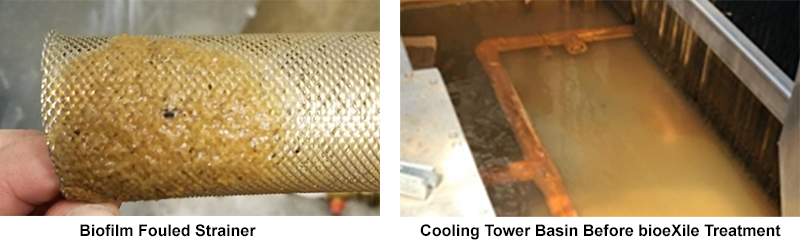
<h5>Customer Challenge</h5> <p><!-- /wp:heading --></p> <p><!-- wp:paragraph --></p> <p>Shortly following turnover of the new building to the owner, the condenser water system strainers started plugging with biofouling (slime) deposits which restricted flow and reduced the ability to keep tenant areas cool. Multiple strainers per floor meant hundreds of locations required maintenance. Increasing biocide feed rates and frequency did not resolve the problem. As outside air temperatures increased, strainers had to be cleaned as often as weekly. Chiller condenser approach temperatures also increased causing higher than design electrical consumption.</p> <p><!-- /wp:paragraph --></p> <p><!-- wp:heading {"level":5} --></p> <h5>Recommended Solution</h5> <p><!-- /wp:heading --></p> <p><!-- wp:paragraph --></p> <p>Solenis was selected to replace the incumbent water treatment provider and solve the problems. An aggressive remediation procedure using bioeXile<strong>®</strong>, a new, patented biofilm conditioning technology was recommended. bioeXile works by disrupting the cross links that connect the adherent microbial secretions that form biofilms. This weakens the biofilm structure making them easier to remove. As bacteria growing in the biofilm are released into the bulk water, they can be killed using an approved biocide. The bioeXile treatment was applied with circulation through all piping and equipment (cooling towers, chillers, plate and frame heat exchangers), and an oxidizing biocide added to maintain the target chlorine residual for 4 hours. The cooling towers were drained, cleaned, and disinfected upon start up. Engineering controls were implemented to manage dead legs and provide routine circulation.</p> <p><!-- /wp:paragraph --></p> <p><!-- wp:paragraph --></p>
⊘
Biofouling
3°F
Reduced condenser approach temperature
⬇
Maintenance and operating costs
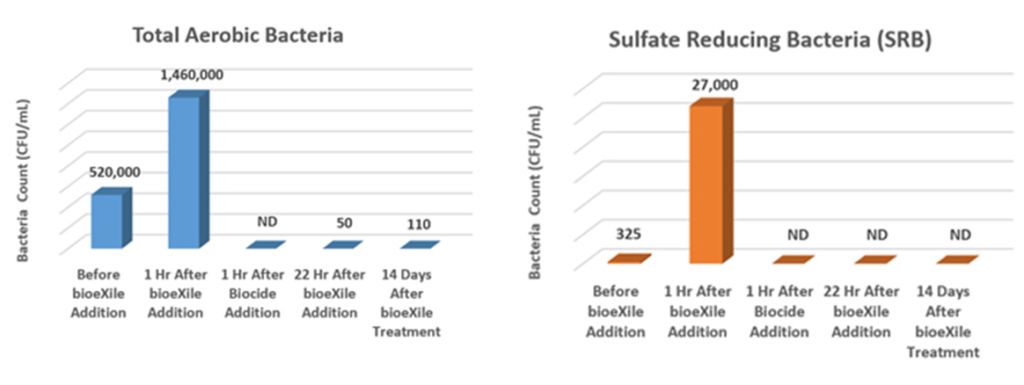
Laboratory test data, equipment readings, visual inspections, and maintenance requirements confirm the efficacy of bioeXile. The initial bioeXile addition (60% total dosage) caused the aerobic bacteria and sulfate reducing bacteria (SRB) counts to spike significantly after only one hour of circulation. This increase is due to bacteria being released into the bulk water as the biofilm was destroyed. As expected, the bacteria counts dropped to below the detection limit during the high level chlorine additions. The turbidity, iron, and copper levels all significantly increased as biofilm was removed and embedded corrosion byproducts were released.
The condenser approach temperatures dropped 3⁰F to return to design and the strainers have not required cleaning since bioeXile remediation. The cooling towers have remained free of visual biofouling. A microbiological control program optimized for biofilm control was implemented to help prevent a re-occurrence of the problems
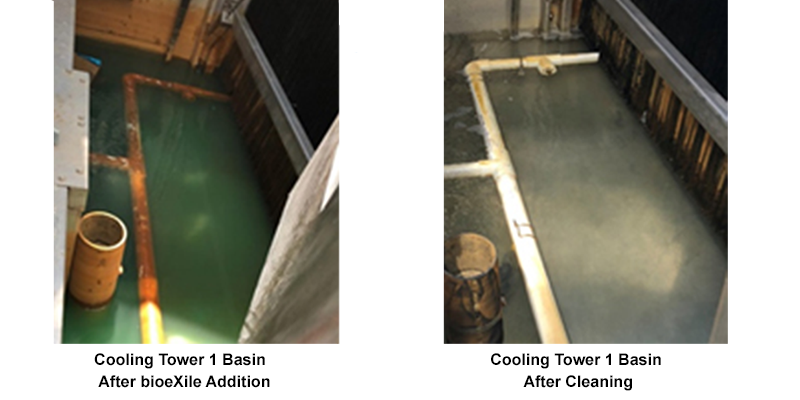
The bioeXile treatment technology was used to resolve a very difficult and costly biofouling problem, saving the building owner thousands in annual repair, maintenance, and operating costs.