GoalProtect new piping during staged hydrotesting while avoiding disposal costs, corrosion, bacteria growth, and unnecessary cleaning/passivation procedures.
✪
Protected the piping from corrosion and bacteria
⊘
The need for flushing
GoalProtect new piping during staged hydrotesting while avoiding disposal costs, corrosion, bacteria growth, and unnecessary cleaning/passivation procedures.
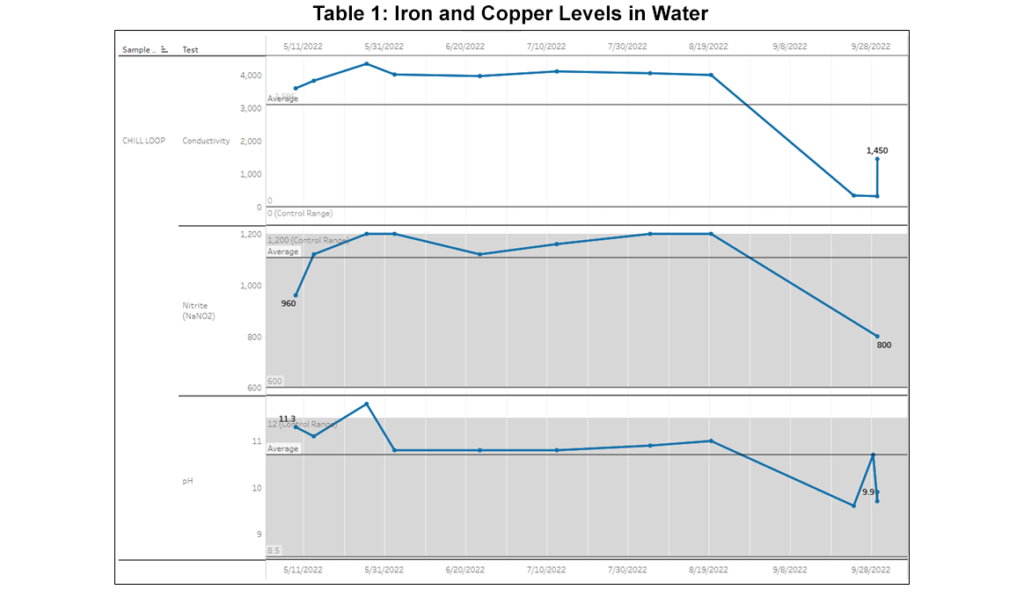
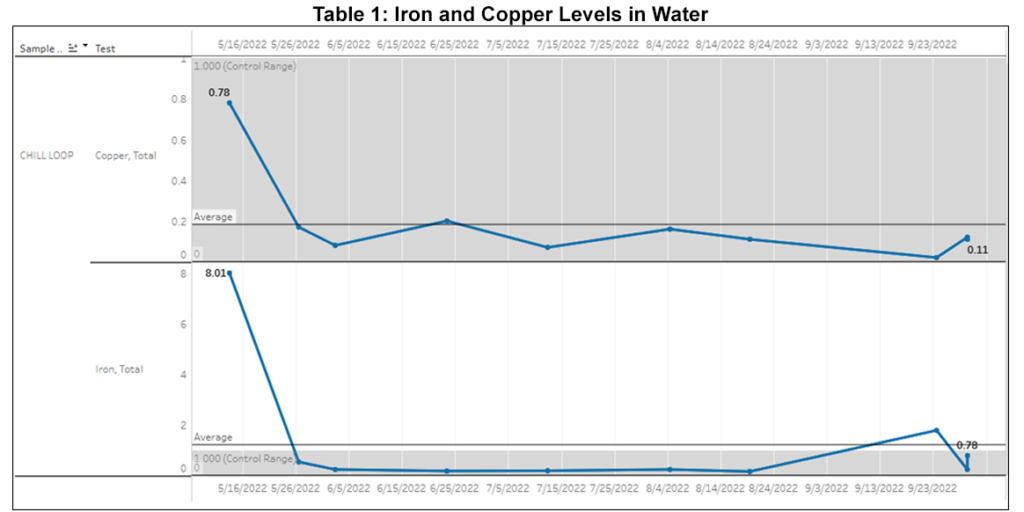
<p><!-- wp:acf/two-cols-text {"name":"acf/two-cols-text","data":{"option_change_padding_block":"1","_option_change_padding_block":"field_6629e1de35327","padding_options":"py-to-60","_padding_options":"field_6629e0d2860af","background_colour":"blue","_background_colour":"field_6629e20935328","block_options_clone":"","_block_options_clone":"field_662a1b96b768f","block_title":"","_block_title":"field_6629f36ac5d6b","block_content_clone":"","_block_content_clone":"field_662a1b96b76fb","text_list_0_text_item":"\u003cul class=\u0022list-check-mark\u0022\u003e\r\n \t\u003cli\u003e\u003cb\u003eIndustry: \u003c/b\u003eNew Construction\u003c/li\u003e\r\n\u003c/ul\u003e","_text_list_0_text_item":"field_662a1bf77d245","text_list_1_text_item":"\u003cul class=\u0022list-check-mark\u0022\u003e\r\n \t\u003cli\u003e\u003cb\u003eApplication: \u003c/b\u003eCooling System\u003c/li\u003e\r\n\u003c/ul\u003e","_text_list_1_text_item":"field_662a1bf77d245","text_list_2_text_item":"\u003cul class=\u0022list-check-mark\u0022\u003e\r\n \t\u003cli\u003e\u003cb\u003eProblem: \u003c/b\u003eAlternative to cleaning and passivating new construction piping to meet local regulations and save money\u003c/li\u003e\r\n\u003c/ul\u003e\r\n\u0026nbsp;","_text_list_2_text_item":"field_662a1bf77d245","text_list_3_text_item":"\u003cul class=\u0022list-check-mark\u0022\u003e\r\n \t\u003cli\u003e\u003cb\u003eSolution\u003c/b\u003e: Nitrite and pH treatment added to protect system from corrosion, and filtration system added to reduce solid impurities\u003c/li\u003e\r\n\u003c/ul\u003e","_text_list_3_text_item":"field_662a1bf77d245","text_list_4_text_item":"\u003cul class=\u0022list-check-mark\u0022\u003e\r\n \t\u003cli\u003e\u003cb\u003eResult: \u003c/b\u003eInitial elevated levels of iron and copper were reduced to normal range and solid impurities removed to meet local regulations and allow project to proceed without accruing major costs\u003c/li\u003e\r\n\u003c/ul\u003e","_text_list_4_text_item":"field_662a1bf77d245","text_list":5,"_text_list":"field_662a1bb97d244"},"mode":"edit"} /--></p> <h5>Customer Challenge</h5> <p><!-- /wp:heading --></p> <p><!-- wp:paragraph --></p> <p>A newly constructed 24 story commercial building in the Southern United States getting ready to hydrotest the lower section of the building which had been completed. Since the upper floors were not ready for testing and the circulation pumps were not installed, the hydrotesting would need to be done in stages. Local regulations require the treated water used in cleaning and passivation procedures to be tested by a certified lab prior to discharging to the sanitary sewer. This often requires rental of storage tanks to hold the water while waiting on the lab results before it can be discharged to sewer. If the water does not meet discharge specs, it must be hauled off for disposal.</p> <p><!-- /wp:paragraph --></p> <p><!-- wp:paragraph --></p> <p>New construction piping may need to sit for periods of time following hydrotesting before pumps/remainder of the system are commissioned. If drained following hydrotesting and before cleaning and passivating the pipe, flash rust may occur. Alternatively, allowing water treated with passivation chemicals to sit for extended periods of time with no circulation or water turnover can cause bacteria issues. The customer requested a method to avoid performing a standard cleaning and passivation procedure on the bottom floors following hydrotesting so that they did not have to:</p> <p><!-- /wp:paragraph --></p> <p><!-- wp:list --></p> <ul class="wp-block-list"><!-- wp:list-item --> <li>Rent a storage tank (Cost $$$$$)</li> <!-- /wp:list-item --><!-- wp:list-item --> <li>Send samples to lab to test if they could discharge to sewer (Cost for hauling $$$$$)</li> <!-- /wp:list-item --><!-- wp:list-item --> <li>Continuously circulate the water for 3-4 months before the rest of piping could be commissioned</li> <!-- /wp:list-item --></ul> <p><!-- /wp:list --></p> <p><!-- wp:heading {"level":5} --></p> <h5>Recommended Solution</h5> <p><!-- /wp:heading --></p> <p><!-- wp:paragraph --></p> <p>An alternative to a standard cleaning and passivation procedure was developed to avoid additional costs due to discharge requirements and to properly fit the conditions of the piping. The water was treated with a nitrite based product with additional borate for pH. The product was added to a filter feeder with a 1 micron bag filter installed to help with initial solids removal.</p> <p><!-- /wp:paragraph --></p> <p><!-- wp:paragraph --></p> <p>A small circulation pump was installed by the mechanical contractor so that some circulation could take place. However, high temperatures were observed in the water due to frictional heat gain, especially when insulation was added to the piping blocking any radiant heat transfer from taking place. This resulted in only being able to circulate the water for 1 hour each day.</p> <p><!-- /wp:paragraph --></p> <p><!-- wp:paragraph --></p> <p>Samples were taken weekly to evaluate the performance of the treatment over a 3 month period. Refer to tables 1 and 2 for charted results.</p> <p><!-- /wp:paragraph --></p> <p><!-- wp:heading {"level":5} --></p> <h5>Results Achieved</h5> <p><!-- /wp:heading --></p> <p><!-- wp:paragraph --></p> <p>The weekly sampling showed elevated iron and copper levels in the initial samples, which is expected in new piping. This was quickly removed by the filter and subsequent samples showed low levels of iron and copper indicating no ongoing corrosion was taking place. Nitrite and pH were also routinely tested to make sure they stayed at expected levels. Once the upper levels and circulation pumps were hydrotested and commissioned, the isolation valves were opened so that the systems could mix and become homogenous. The tie in of upper floors diluted down the treated in the lower floors, which can be seen by the drop in conductivity and nitrite. Following the tie in, nitrite was added to the full loop to bring levels to appropriate treatment range. Iron and copper levels continued to be within expected ranges following tie in of the whole building. This alternative to standard cleaning and passivation:</p> <p><!-- /wp:paragraph --></p> <p><!-- wp:list --></p> <ul class="wp-block-list"><!-- wp:list-item --> <li>Avoided need for water storage rental, testing, and potential cost of disposal</li> <!-- /wp:list-item --><!-- wp:list-item --> <li>Protect the system from corrosion and bacteria in infrequent flow conditions</li> <!-- /wp:list-item --><!-- wp:list-item --> <li>Avoided need for flushing and was compatible with normal closed loop treatment</li> <!-- /wp:list-item --></ul> <p><!-- /wp:list --></p> <p><!-- wp:image {"id":14150,"width":"646px","height":"auto","sizeSlug":"large","linkDestination":"none","align":"center"} --></p> <p><!-- /wp:image --></p> <p><!-- wp:image {"id":14151,"sizeSlug":"large","linkDestination":"none","align":"wide"} --></p> <p><!-- /wp:image --></p> <p><!-- wp:paragraph --></p> <p><!-- /wp:paragraph --></p>
✪
Protected the piping from corrosion and bacteria
⊘
The need for flushing