Every year on June 7, World Food Safety Day brings global attention to one of the most essential responsibilities shared across the food chain: helping ensure the food and water people consume is safe. This is also a moment for organizations across the industry to reflect on what is working, where risks remain, and how practices can continue to improve.
In 2026, the World Health Organization (WHO) and the Food and Agriculture Organization of the United Nations (FAO) are focusing the campaign on the theme “From burden to solutions – safe food everywhere.” The message is clear. Foodborne diseases continue to affect health, livelihoods, education and economies, yet most of these illnesses are preventable when science, knowledge, reliable data and practical action come together.
For food businesses across sectors including food service, hospitality and cruise, retail, food & beverage manufacturing, and healthcare, that message is more than a public health reminder. It is a call to strengthen daily operations. Food safety is connected to consumer trust, brand protection, operational efficiency, and the ability to create safer environments for everyone who depends on your business.
Across the industry, progress happens when the right people, experience and technology work together. In food safety, that combination matters every day, from the way ingredients are received to the way meals are prepared, preserved, and displayed.
Food safety systems have changed significantly over the last decade. Many organizations have moved from local, site-by-site programs to corporate Food Safety Management Systems that align global standards with local regulations. This evolution is important because food distribution no longer sees borders. Ingredients, suppliers, people, equipment and customers are connected across regions, countries and continents.
That complexity makes food safety imperative, tangible, and visible, but it also makes it more demanding. A strong program cannot depend on policies alone. It must be understood and applied by the people making decisions every minute in kitchens, production areas, storage rooms, loading bays, service lines and of course by management, from quality to procurement departments.
This is where the human factor becomes “the” safety factor.
Food safety risks can begin in any place. They can be linked to suppliers, water, facilities, temperature control, storage, cleaning, equipment or procedures. However, extensive field experience and studies across food service environments consistently point to one recurring root cause: gaps in knowledge and behavior at the point of execution.
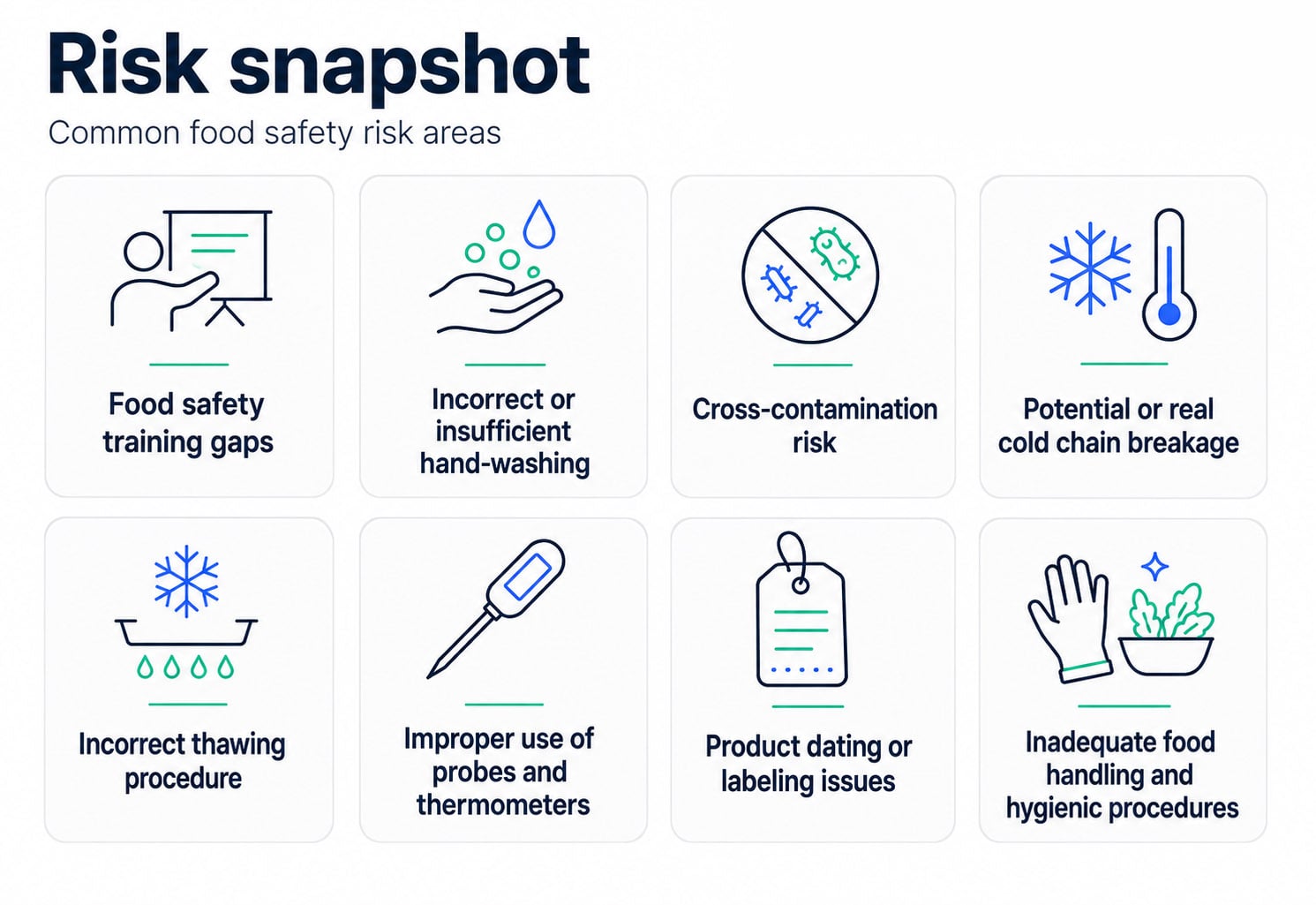
In research conducted by Antonio Antolín in coordination with the Veterinary Faculty of the Complutense University of Madrid and data provided by most relevant food service/catering companies, common risk areas include inadequate food handling and hygienic procedures, lack of food safety awareness of the harbored risks, incorrect or insufficient hand-washing, cross-contamination risks, potential or real cold chain breakage, improper product dating or labeling, incorrect thawing procedures and improper use of probes and thermometers.
Accidents can happen, but foodborne disease prevention starts with food handling and hygiene knowledge.
Accidents can happen. However, many of the factors that influence foodborne disease prevention depend on whether people understand what to do, when to do it and why it matters in real operating conditions. A procedure posted on a wall is helpful. A digital checklist is helpful. A thermometer is helpful. But none of these tools can protect consumers unless the person using them understands the risk they are helping control and how to control them.
That is why food safety training should not be treated as an add-on. It should be part of the operating culture of every food business. Training must be role-specific, refreshed regularly and connected to the real conditions teams face every day. The person receiving supplier deliveries, the employee preparing food, the team member serving consumers, and the supervisor verifying corrective actions, all play a role in prevention.
This is especially important in sectors with high staff turnover. Food service, hospitality, and retail environments often depend on teams that change frequently. When new employees enter critical roles without enough food safety awareness, even a well-designed system can become vulnerable. One untrained person in a kitchen weakens the entire safety chain.
Digital training platforms such as Diversey’s Hygiene Academy illustrate how organizations can scale knowledge consistently across sites, roles, and geographies. This particular tool addresses this challenge by offering e-learning for institutional and food and beverage manufacturing professionals. The platform supports training on hygiene, sanitation, microbiology, Good Manufacturing Processes, allergen management, Cleaning in Place and specific microbe control topics, among other areas. For businesses managing multiple sites, languages, and job functions, digital learning can help build consistency while supporting documentation and progress tracking.
Still, training is only one part of the answer. Food safety culture grows when people receive support, coaching, motivation and awareness on how important their missions are. These help employees understand the purpose. It creates space for questions, corrections, and drive. It also positions food safety professionals as partners who help teams improve, rather than inspectors who only identify failures.
This matters because people are more likely to follow a standard when they understand the responsibility behind it. Hand-washing should not happen only because an alarm rings. A food professional must know when it is needed, how cross-contamination happens, and why a small action prevents serious public health risks.
Technology is also reshaping how companies monitor and manage food safety performance by equipping them with greater visibility, faster feedback, and more consistent decision-making.
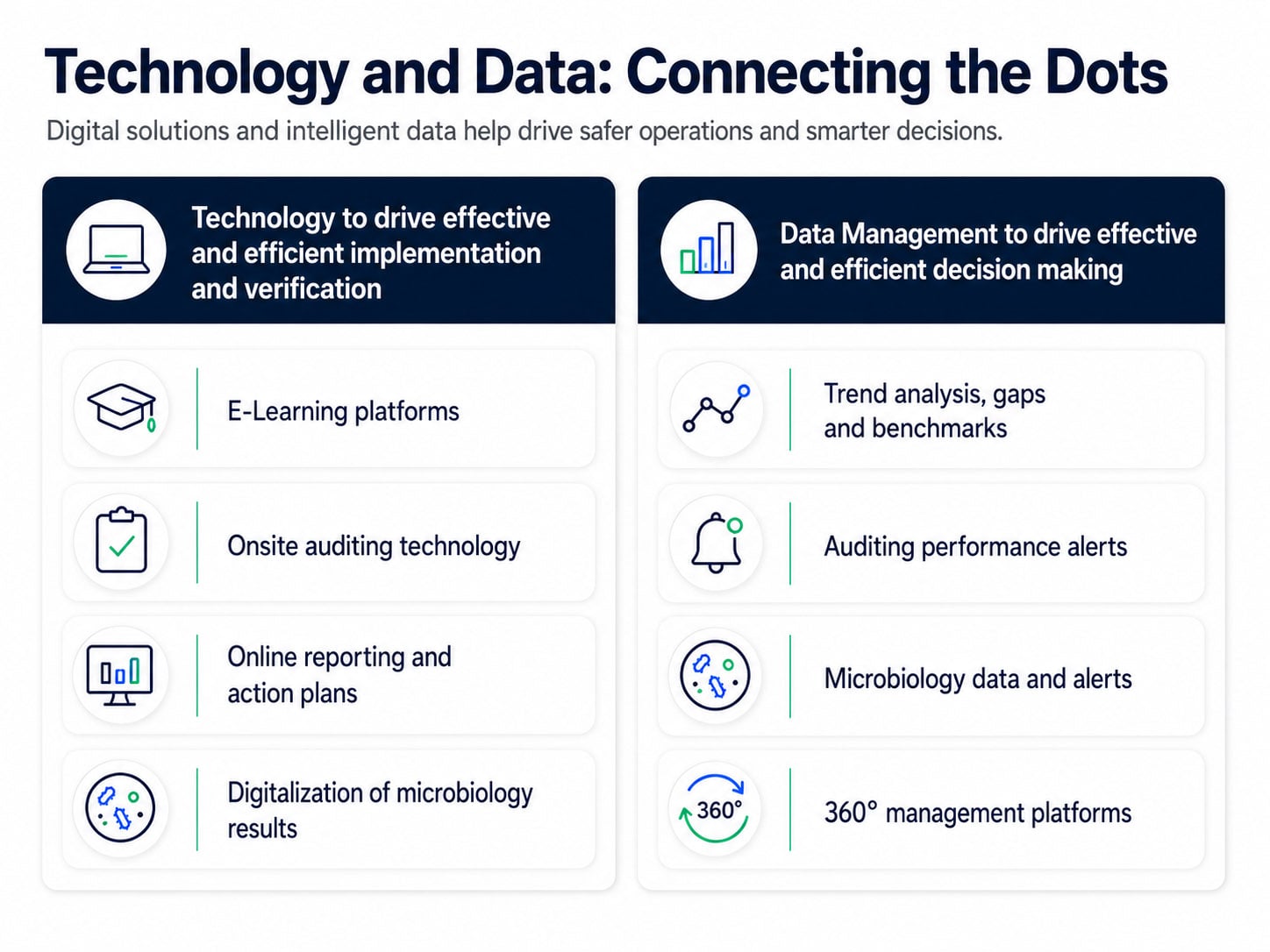
Online reporting, onsite service technology, digitalized microbiological results and alerts, e-learning platforms, and 360° management systems can give corporate and local teams a clearer view of performance. Instead of waiting weeks to review information, businesses can act faster, prioritize resources, and focus on improvements where most needed.
For food and beverage processors, tools such as audit and risk assessment frameworks (for example, Diversey SecureCheck™) are designed to help identify site-specific risks, providing an in-depth analysis to help identify site-specific food safety and contamination risks. The program helps simplify the management of food safety and hygiene throughout production by identifying areas with potential to harbor or spread microorganisms and supporting practical recommendations to reduce contamination risks.
In food service environments, integrated kitchen hygiene programs bring together cleaning practices, operational procedures and food safety standards to support consistent execution across locations. For instance, Kitchen Care solutions from Diversey help support clean, protected kitchen spaces across restaurants, central production kitchens, retail counters, catering and banqueting facilities. These integrated solutions address key customer priorities such as food safety, safer and faster cleaning systems, guest experience, responsible packaging, food waste reduction, and cost control.
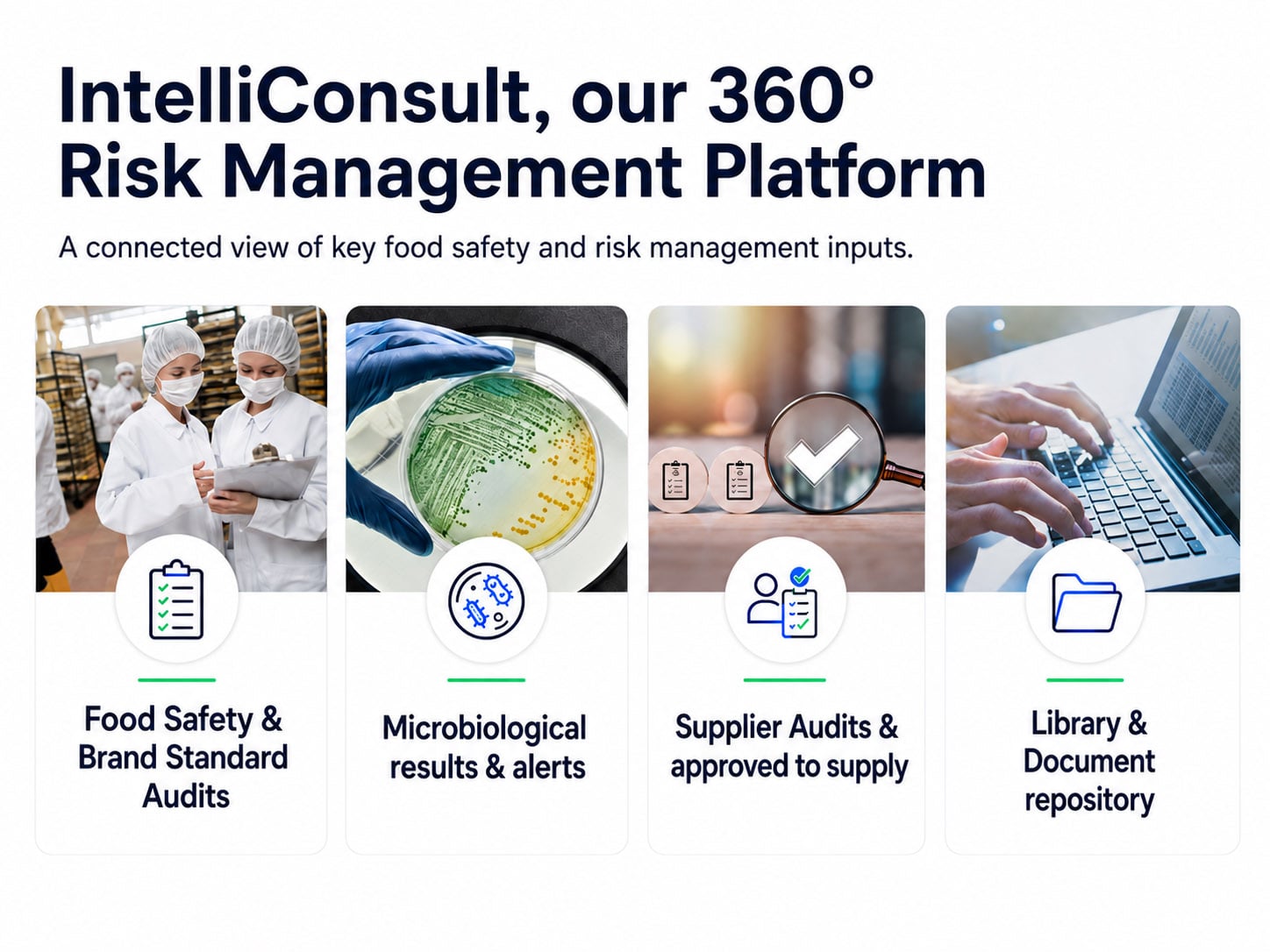
The value of technology is not only in collecting more information. It is in making food safety visible and actionable. A dashboard can show trends. A microbiological alert can help identify a potential issue. An online corrective action plan can support faster follow-up. A 360° platform can connect food safety and brand standards, supplier audits, microbiological results and document repositories in one place.
But data does not improve food safety on its own. People do.
The 2026 World Food Safety Day theme encourages the food chain to use evidence to guide focused and cost-effective solutions. In daily operations, this means data should help teams ask better questions: Where are our recurring gaps? Which sites need more coaching? Are corrective actions being closed? Do our employees understand the “why” behind the procedure? Are we investing in the areas that will create measurable improvement?
When data is connected to knowledge, training, and operational discipline, it becomes a tool for prevention. When it is disconnected from people, it becomes another report.
This people-first approach also connects with broader sustainability efforts across the industry, where food safety plays a role in reducing waste, preventing recalls and supporting responsible operations. Solenis is no exception. With its ESG+C™ approach, it prioritizes the customer as part of how we address environmental, social and governance topics. Across our business, we aim to support customers with solutions that help them operate more efficiently, strengthen resilience, and create cleaner, safer environments.
Food safety is part of that broader commitment. It protects consumers. It supports responsible operations. It helps reduce waste, recalls, or poor control processes. And it helps food businesses build the trust that allows them to serve communities with confidence.
Independent food safety consulting plays an important role in helping organizations assess risks objectively and strengthen their systems over time.
Introducing DiverseyConsulting
Diversey Consulting is Solenis’ Value Advantage Professional Food Safety Services department. Dedicated to being Your Food Safety, Operations and Brand Partner. Its Food Safety and Risk Management professionals help customers protect their brands, enhance operational standards and support long-term food safety success through practical, reliable and easy-to-implement risk-management solutions. The team’s areas of expertise include advisory and initial assessment, HACCP design and implementation, FSMS support, food safety training, auditing and microbiology, supplier auditing and approval, preparation for certification, Food Safety Culture mapping and advanced-specialized food safety programs.
Increasingly, digital tools are also being used to complement this expertise, helping translate insights into structured action plans, track corrective measures, and provide consistency across sites. Solutions such as IntelliConsult are examples of how digital enablement can support decision-making while keeping the focus on operational improvement rather than compliance alone.
The World Food Safety Day is an important moment of awareness. But food safety itself is built in ordinary moments: a delivery checked before it enters the kitchen, a thermometer used correctly, a surface cleaned and disinfected at the right time, a supplier approved before service begins, a new employee coached before a mistake happens, a data trend reviewed before it becomes an incident.
Foodborne diseases are preventable. Making that prevention real requires strong systems, reliable data, effective technologies, and people who understand their role in protecting people’s health.
Sources
- World Health Organization, World Food Safety Day 2026
- FAO/WHO Codex Alimentarius, World Food Safety Day 2026 theme launched