Best Practices to Prevent Corrosion
Periodically, it is necessary to take cooling systems offline due to seasonal cycles, maintenance, lead-lag configurations, etc. An offline cooling system can experience a multitude of problems, though, including microbiological growth and corrosion. This can lead to:
- Reduced equipment life
- Increased operational and utility costs
- Increased maintenance costs
Facility managers are faced with the unappealing options of wasting money, needlessly running a system, or repairing a system that sits unprotected too long. Luckily, there are options available to mitigate these concerns and problems.
How Corrosion Happens
Unless continuously replenished, the protective films formed by cooling water corrosion inhibitors tend to degrade over time, leaving chiller condensers, piping and heat exchangers vulnerable to pitting as well as accelerating corrosion. Keeping these protective films replenished involves not only the correct concentration of corrosion inhibitors but continuous water flow to get the chemistry where it is needed most.
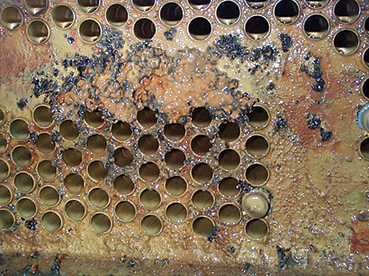
Idle systems with no water circulation provide ideal conditions for problem-causing microbiological growth to cause corrosion and fouling concerns. This can lead to high head pressures, high electricity costs, and chiller shutdown when the systems are put back into service.
Best Practices
The best option for idle or offline chillers and cooling systems is to drain them completely and store dry.
If dry storage is not feasible, there are wet-layup procedures that can be used to minimize the problems associated with offline cooling systems. These include:
- Maintaining water circulation or, at a minimum, periodic flow when continuous flow is not an option
- Flushing dead legs
- Establishing and maintaining protective levels of corrosion inhibitors
- Maintaining non-oxidizing biocide levels
- Monitoring the system
- Adjusting treatment levels as needed
Concerns with Enhanced Chiller Tubes
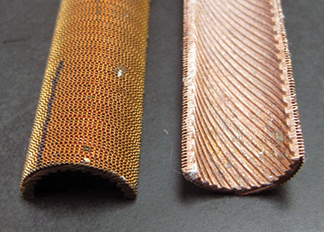
Enhanced chiller tubes have spiral grooves or “rifling” to increase surface area, which permits greater heat transfer. Unfortunately, they are particularly vulnerable to pitting damage and tube fouling from biofilms. Improper lay-up can significantly shorten their life.
Solenis Can Help
Offline cooling equipment can pose many challenges that must be addressed to save both time and money. As a leader in boiler, cooling, and process water systems, Solenis knows that maintaining a water system requires more than just chemicals and testing to avoid long-term problems. It requires expertise and a team.