Diving into How These Tests Differ
Dip slides and laboratory plate counts are both used to monitor total aerobic bacteria levels in cooling water systems. However, the results sometimes don’t agree. This invariably raises the question “Which one’s right?” The answer may be “Both.” To understand why dip slides and laboratory bacteria testing can give different, equally valid results requires a deeper dive into what these tests actually measure, and the factors that influence the results.
What They Measure
Dip slides and laboratory plate counts provide a measure of the number of free-floating aerobic bacteria growing in a water sample, with the results expressed as Colony Forming Units per mL of water (CFU/mL). Total aerobic bacteria counts are widely used as a general indicator of microbial activity in the sample. High bacteria counts (> 10,000 CFU/mL) can be an indicator of developing microbiological problems. However, low bacteria counts do not indicate an absence of microbiological growth. For example, free-floating bacteria counts in the bulk water do not reflect the microbial populations that are growing in protected biofilms attached to surfaces.
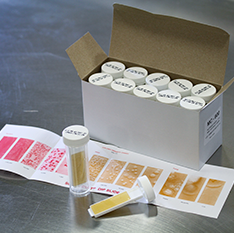
Bacteria Dip Slides:
Laboratory Agar Plate:
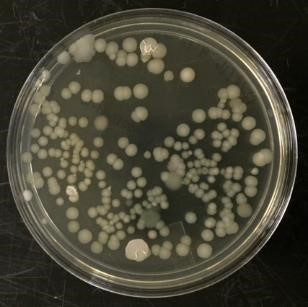
These tests reflect the number of “culturable” aerobic bacteria in a sample, which could be as low as 1% of the total bacteria present. They do not measure bacteria that will not grow on the culture media at the incubation temperature. They do not measure bacteria that are not actively growing at the time of sampling. They do not measure bacteria with special growth requirements, including iron reducing bacteria (IRB), sulfate reducing bacteria (SRB), or Legionella.
Why They Differ
Several factors can cause dip slide and laboratory bacteria test results to differ:
- Culture Media: The most significant is the culture media. There is no standard media for aerobic bacteria testing. Dip slides usually employ a high nutrient tryptic soy agar (TSA) media, while laboratory plate counts may use either a high nutrient agar media or a low nutrient media such as R2A Agar. Different growth media can result in vastly different bacteria counts.
- Incubation Temperature: Differences in incubation temperature also impact the results. Dip slides are often incubated at room temperature, while laboratory plate counts are incubated at 95⁰F, the temperature specified by Standard Methods.
- Design Limitations: Although dip slides are designed to absorb a 0.1 mL sample, they may absorb more or less depending on desiccation and immersion time.
- Interpretation: Dip slide interpretation is also more subjective, requiring the user to visually estimate colony density. In contrast, laboratory plate counts are reliably diluted and counted by trained technicians.
- Transit: And even when samples are taken at the same time and place, and grown on the same media at the same temperature, laboratory results may differ from dip slides due to bacteria growing or dying while in transit to the lab.
Using Results
Whether determined by dip slides or laboratory plate counts, aerobic bacteria counts are a widely used to monitor microbial activity in cooling water systems. However, bulk water bacteria counts don’t reflect bacteria growing inside biofilms. Systems with low bacteria counts can still have serious problems related to biofilms, resulting in heat transfer loss, microbial corrosion, and Legionella amplification.
Experience shows that dip slide and laboratory microbial testing are most useful when the following points are considered.
- Trends: Bacteria count trends over time and following specific events, such as system startup or disinfection, are a better indicator of microbial activity than single test results.
- Expect Differences: Experience also shows that differences between dip slide and laboratory results are to be expected.
How We Can Help
Interpreting microbial test results can be complicated with several variables to consider. As a leader in cooling, boiler, and process water systems, Solenis knows that maintaining a water system requires more than just chemicals and testing to avoid long-term problems. It requires expertise and a team. We can help. Contact us today!