Water Treatment
Water treatment makes good economic sense. An effective water treatment program helps maximize the life, efficiency, reliability, and safety of boiler and cooling systems and minimizes total operating costs. Water treatment only represents a small percentage of the costs associated with operating a boiler or cooling system. However, this small percentage dramatically influences the total operating costs (fuel, water, maintenance, and labor).
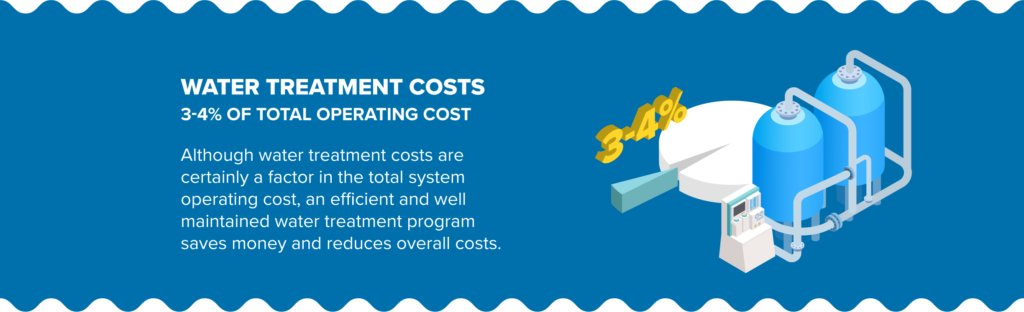
Office buildings and manufacturing plants contain millions of dollars of expensive equipment. Boiler and cooling water systems represent large capital investments, and an ineffective water treatment program can significantly reduce system life, increase maintenance costs, and result in early replacement. Even small reductions in efficiency due to poor water treatment translate into large increases in operating costs.
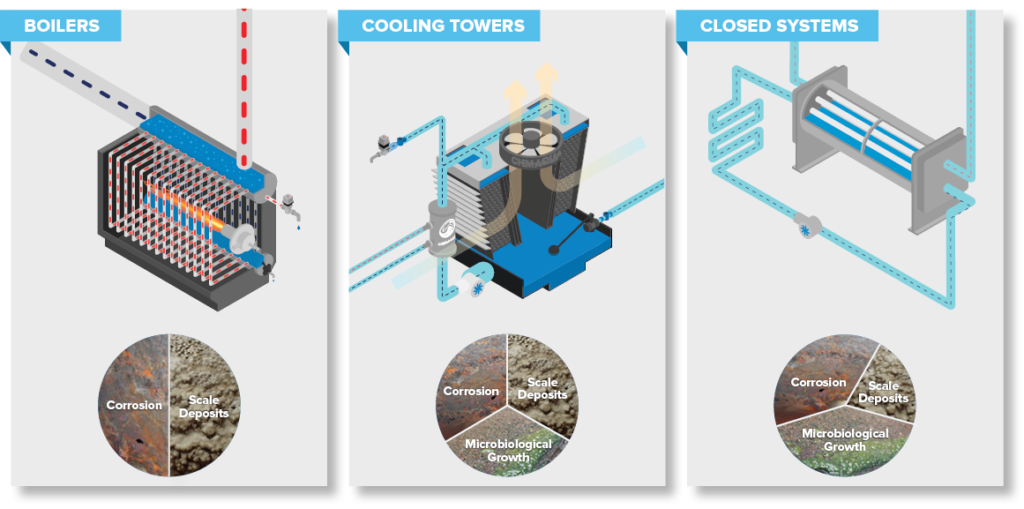
The waterside problems that occur in boiler and cooling systems are typically related to corrosion, deposits, or microbiological growth.
Corrosion in Water Systems
Corrosion can be defined as the destructive reaction of a refined metal (steel, copper, brass, aluminum, etc.) with its immediate environment.
What does corrosion do to water systems?
Corrosion in water is usually an electrochemical reaction, often initiated by low pH or the presence of dissolved oxygen. The end result of corrosion is metal loss, which shortens system life and leads to equipment failure. Corrosion by-products, such as rust, also contribute to deposit formation.
Scale and Deposits
Deposits may consist of a single substance, such as mineral scale, or be a complex mixture of scale, suspended solids, sludge, corrosion by-products, and biological matter (slime). Mineral scale is an adherent solid that forms on system surfaces as a result of over concentration and/or changes in solubility due to temperature. Many deposits are the result of several different types of material accumulating together in an adherent mass. Except where microbiological fouling is involved, most deposits are termed scale regardless of their composition.
Without effective water treatment, the end results of deposits are:
- Reduced heat transfer efficiency
- Flow restriction
- Increased operating costs
- Reduced system life
- Equipment failure
Microbiological Growth: An Operation and Health Risk
Microbiological growth, if allowed to grow unchecked, can cause severe corrosion and slime deposits in water. Cooling towers are particularly susceptible to microbiological fouling since they can provide ideal conditions for the growth of problem-causing microorganisms. Furthermore, if the conditions are right, disease-causing bacteria such as Legionella can thrive in industrial cooling and domestic water systems. The end result of uncontrolled microbiological growth is all the negative conditions associated with corrosion and deposits plus safety concerns.
Impact of Effective, Sustainable Water Treatment
Each of these problems outlined above - corrosion, deposits, and microbiological growth - are inter-related, with the presence of one contributing to the tendency for the other to occur.
Unless the proper measures are taken, the end result of these problems will be high operating costs, reduced equipment life, unsafe operation, and even unexpected system failure. An effective, sustainable water treatment program must address all of them.
Why Effective Water Treatment Matters
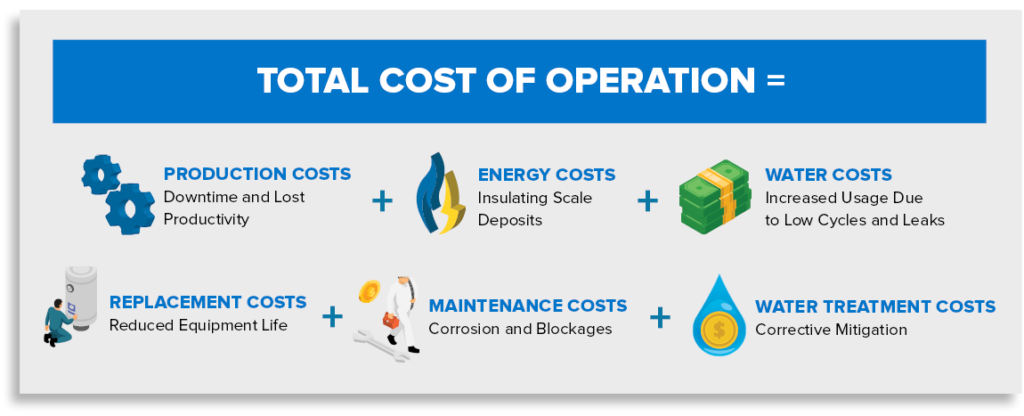
Water treatment is an important part of the preventative maintenance program for boiler, cooling, and process water systems. There are three critical components to a sustainable water treatment program: Chemicals, Equipment, and Service. If you factor in the benefits provided by effective water treatment, such as reliability, efficient operation, extended equipment life, and safety, it should be clear that purchasing a water treatment program based on costs alone is ill-advised.
The right water treatment partner can help ensure you have reliable, efficient, and well-maintained heating and cooling systems that will minimize overall costs and improve sustainability. A knowledgeable water treatment partner, like Solenis, provides value that goes far beyond the chemical costs.
Related Resources
View our infographic: Why Water Needs to be Treated