In times of heightened public concern around infectious diseases, access to accurate, science‑based information is essential. Ebola disease (EBOD) is a serious viral illness that continues to be monitored closely by global public health authorities. While outbreaks remain limited and localized, understanding how the virus spreads, recognizing symptoms, and knowing how to reduce risk are critical for protecting people, workplaces, and communities.
What you need to know about Ebola disease
Ebola disease is a rare but severe viral illness that can cause serious health complications and, in some cases, death. Early recognition and appropriate infection‑prevention measures play an important role in limiting transmission and protecting healthcare workers, facility staff, and the broader public.
Origins
The Ebola virus is named after the Ebola River in what was Zaire (now Democratic Republic of Congo) where the first outbreak of the virus occurred in Yambuku, Democratic Republic of Congo, in 1976 along with a simultaneous outbreak in Nzara, Sudan.
Disease caused by the Ebola virus was previously referred to as Ebola Virus Disease or EVD. In 2023 the naming convention was changed to reflect that a group of viruses, now called orthoebolaviruses, were all capable of causing the disease which has been renamed as Ebola disease (EBOD). Outbreaks of the infection causing EBOD have occurred more than 20 times in Africa since the initial 1976 outbreaks. EBOD is a severe disease with a high mortality rate (40-90%) that can occur in people and some primates (monkeys, chimps, and gorillas).
The viruses causing EBOD (genus Orthoebolavirus) are members of the Filoviride family of viruses. There are four species of orthoebolavirus (Ebola virus (Zaire), Sudan virus, Tai Forest virus, Bundibugyo virus) known to cause disease in people and two other species (Reston virus, Bombali virus) that have not infected people to date but have been detected in animal populations.
Geographic Risk of Exposure
Confirmed cases of EBOD have occurred in the following countries in central and western Africa, primarily in remote villages and near tropical rainforests: Guinea, Liberia, Sierra Leone, Democratic Republic of Congo, Gabon, South Sudan, Ivory Coast, Uganda, Republic of Congo and South Africa (imported).
For the latest updates on geographic exposure risk, visit the link.
Source/Natural Reservoir
There has been much investigation into the host that carries the virus. Researchers believe that the virus is carried by animals (zoonotic), with fruit bats (pteropodidae family) being the most likely host. According to the World Health Organization (WHO), infection of people has been documented through handling of infected chimps, gorillas, fruit bats, monkeys, forest antelope, and porcupines that have been found ill or dead in the rainforest. Because pig farms in Africa can draw fruit bats and pig farms seem to amplify outbreaks of EBOD, measures should be taken to limit transmission via pig farms.
Signs and Symptoms
Initial symptoms include sudden onset fever, intense weakness, muscle pain, headache, and sore throat. Following the initial symptoms, the person develops vomiting, diarrhea, rash, reduced kidney and liver function, and in some cases, bleeding. The full symptom list includes the following.
- Rash
- Red eyes
- Hiccups
- Cough
- Sore throat
- Chest pain
- Difficulty breathing
- Difficulty swallowing
- Bleeding inside and outside the body
Some patients may also experience:
- Fever
- Headache
- Joint and muscle aches
- Weakness
- Diarrhea
- Vomiting
- Stomach pain
- Lack of appetite
Once infection occurs, symptoms appear rapidly. Symptoms typically appear 8-10 days after exposure but can develop 2-21 days after exposure. While the mortality rate for an Ebola outbreak is 40-90%, the reasons for death or survival are not well understood. It is known that people that die from EBOD have not developed a significant immune response to the virus, but the factors influencing this are not well understood. An effective vaccine is available for Ebolavirus-Zaire, but this vaccine appears to provide limited protection against other Orthoebolavirus species.
Diagnosis
Performing a diagnosis on a person infected for only a few days is difficult because the early symptoms (headache, fever, red eyes, skin rash, etc) can be non-specific of Ebolavirus infection. The symptoms likely to present early in the illness are often seen in patients with more commonly occurring diseases. Diagnosis and treatment should only be performed by a trained physician who can rule out other potential diseases including: malaria, typhoid fever, shigellosis, cholera, leptospirosis, plague, rickettsiosis, relapsing fever, meningitis, hepatitis, and other viral hemorrhagic fevers.
If there is suspicion of EBOD, such as early symptoms, the physician/provider will order patient isolation and public health authorities will be informed. Patient samples will be taken from the patient and sent in for laboratory testing to confirm the diagnosis. Only trained staff should handle the samples of a potential EBOD patient as they must be processed under Bio-Safety Level 4 containment (BSL-4). Persons infected with EBOD will become severely ill and require intensive supportive care, which requires trained healthcare workers.
Because patients with EVD may also have other conditions or illnesses at the same time, the patient may need to be treated for other conditions or illnesses in addition to EBOD.
Method of Transmission
The manner in which the virus appears (method of transmission) is also not firmly established. However, best evidence to date suggests that contact with an infected animal (a bite or contact with bodily secretions or organs) causes the initial transmission from animals to people, with person-to-person transmission occurring through broken skin or mucous membranes and contact with infected blood or body fluids causing the outbreak.
EBOD is not believed to be transmitted by air, water, or food, although consumption of raw milk, raw meat, or raw organs of an infected animal are also believed to be a potential source of infection for people. All food (especially meat) should be thoroughly cooked to prevent any risk of transmission.
Previous EBOD outbreaks have spread to the family and friends of infected people. This is believed to occur through close contact with infection secretions while caring for a sick family member or handling of the body after death, causing similar exposure to infected bodily fluids.
During an outbreak, the disease can spread rapidly through direct contact and exposure to infected blood or body fluids or indirectly through contact with the environment contaminated with infected blood or body fluids. This is especially the case when people close to the infected person (family, healthcare workers, cleaning staff, clergy, etc.) do not use proper barriers, such as masks, gowns, and gloves. Equipment and instruments are also believed to be a source of infection if they have been contaminated with blood or body fluids and are not disinfected or sterilized appropriately after contamination. This also includes reuse of contaminated needles and syringes without sterilization.
While initially an infected person must have symptoms of EBOD to be contagious, recent evidence indicates that after infection people can transmit the Ebola virus through body fluids while the virus is still in their blood/body fluids. This may occur after symptoms have stopped and are under further investigation.
Once transmission to a human host occurs, the virus can be transmitted to other people through:
- Contact with blood or secretions of an infected person (direct contact)
- Exposure to contaminated needles, bandages, clothing, or other infected objects (indirect contact)
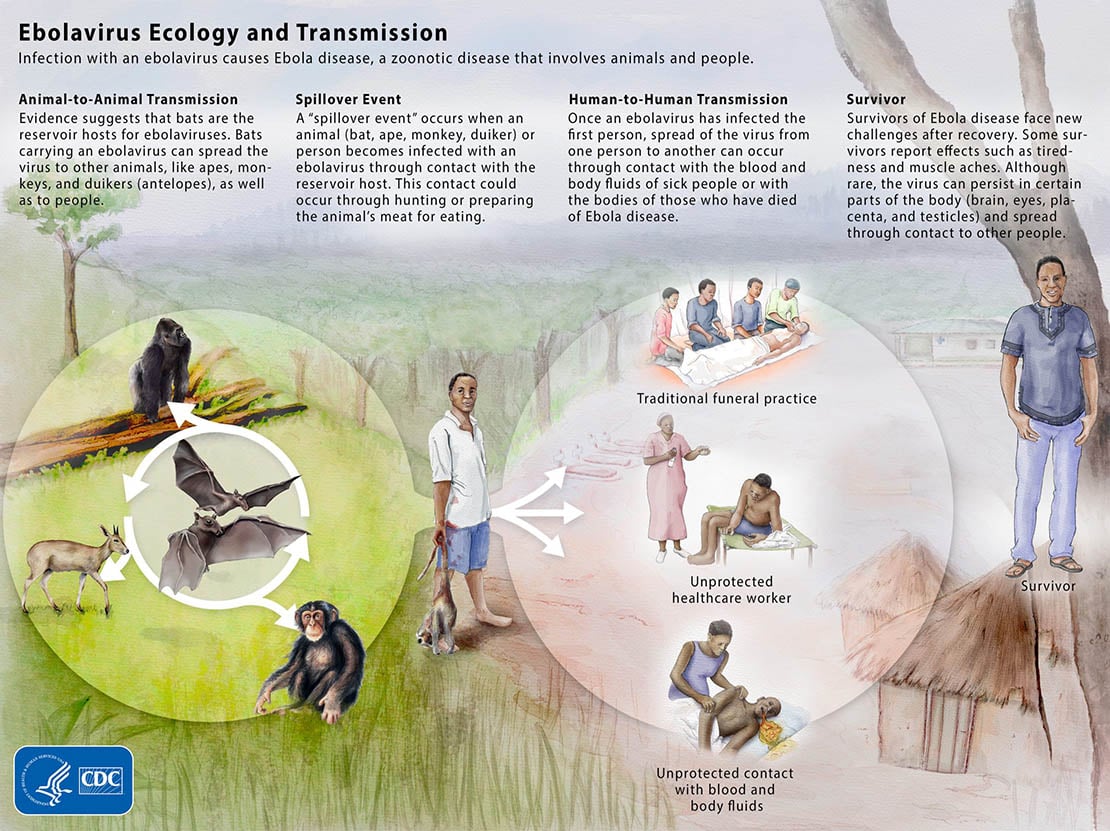
Figure 1: Ebola Virus Ecology and Transmission Graphic. Source: U.S. Centers for Disease Control and Prevention (CDC)
Prevention and risk reduction strategies
Because Orthoebolavirus infection can occur through multiple routes, a range of prevention methods are recommended. The Centers for Disease Control and Prevention (CDC) and WHO recommend standard, contact, and droplet precautions for hospitalized patients.
People caring for the patient with EBOD risk exposure when providing care. The primary consideration is prevention of contact with blood or body fluids of an infected person, which could result in the virus crossing their mucus membrane barriers or entering through cuts in the skin and thus becoming infected. For a suspected case of EBOD, facilities should be prepared to implement viral hemorrhagic fever isolation precautions including:
- Appropriate Personal Protective Equipment (PPE) as recommended by the WHO includes double gloving with the outer glove reaching to mid-forearm to cover the cuff from the gown, disposable fluid resistant long-sleeved gown or coverall, disposable waterproof apron, fluid resistant mask (that does not collapse against the mouth), eye protection (face shield or goggles) that completely covers the eyes, nose, and mouth, waterproof boots or boot covers, and the use of a fluid resistant respirator if performing aerosol generating procedures. Single use PPE is never to be reused. The CDC additionally recommends the use of a Powered Air Purifying Respirator (PAPR) with a full-face shield and helmet or an N-95 respirator and surgical hood to ensure all skin above the shoulders is covered. Both WHO and CDC recommend PPE be used under the guidance of a trained observer who can monitor that PPE is being donned and doffed correctly.
- Infection control measures, such as equipment decontamination, disinfection, and sterilization as appropriate. For environmental surfaces and patient care equipment, use of a country government approved disinfectant is preferred, but in a country of limited means, the WHO recommends a 5,000 ppm (0.5%) solution of sodium hypochlorite (bleach). The WHO also recommends a cleaning step to ensure that all organic matter is removed which might inactivate the disinfectant prior to disinfection. The CDC recommends using registered disinfectants, such as appears on the EPA's List Q, with non-enveloped virus claims to ensure effectiveness against Ebola. A full set of PPE is to be worn when cleaning the environment and handling infectious waste.
- Hand hygiene as per the WHO five moments and before/ after glove use.
- Isolation of suspected EBOD patients from contact with unprotected persons.
- If a patient with EBOD dies, it is equally important to prevent direct contact with the body of the deceased.
- Autoclaving as a preferred option. While incineration is often the current method of waste disposal, the WHO has actively been promoting autoclaving as a preferred option. After incineration or autoclaving, burial in a pit is an acceptable method of disposal for the inactivated waste. In countries such as the US, Ebola contaminated waste would require a special permit for transportation. The CDC recommends incineration, autoclaving or other methods of inactivating the waste. Ebola-associated waste that has been appropriately incinerated, autoclaved, or otherwise inactivated is not infectious, does not pose a health risk, and is not considered to be regulated medical waste or a hazardous material under US federal law. Therefore, such waste no longer is considered a Category A infectious substance.
- Handling of linens should include use of leak proof bags, a full set up PPE and heavy rubber gloves and an apron when handling soiled linens, avoiding sorting and pretreatment procedures, and an assessment of whether laundering can render the laundry hygienic. While standard healthcare laundry procedures for contaminated fabrics are capable of making the fabric hygienic, because of the hazard posed by Ebola, the CDC recommends disposing of contaminated fabrics. This may need to include incineration, autoclaving, or other methods of inactivation to allow for transportation.
References and Useful Websites
Guidelines are available from the CDC and WHO to aid in better understanding of the disease and its prevention. These references were used in the preparation of this document.
https://www.cdc.gov/ebola/hcp/clinical-guidance/index.html
https://www.cdc.gov/ebola/about/index.html
https://www.who.int/publications/i/item/9789240111332
https://www.who.int/emergencies/disease-outbreak-news/item/2026-DON603
https://www.cdc.gov/ebola/hcp/communication-resources/ebola-virus-ecology-and-transmission-graphic.html