Impact of Poor Microbiological Control
Uncontrolled microbiological growth in cooling and process water systems is a multi-billion-dollar problem for businesses each year. The primary cause of this expensive problem is biofilm. Biofilms form when bacteria and other microorganisms found in the bulk water attach to exposed surfaces and begin to produce a mass of biopolymers known as extracellular polymeric substance (EPS). The EPS provides a sticky, protective barrier that allows complex communities of bacteria to thrive and exponentially grow. Bulky, biofouling deposits can quickly form as the EPS traps dirt, corrosion byproducts, and other debris suspended in the water, leading to blockages.
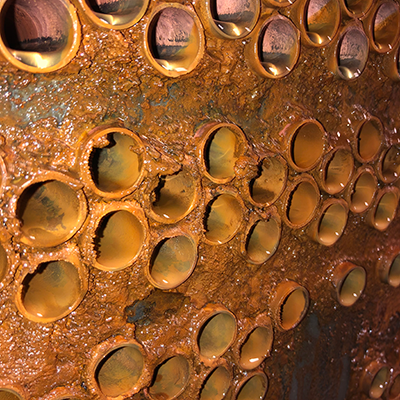
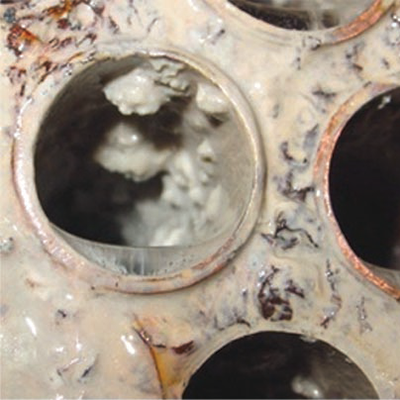
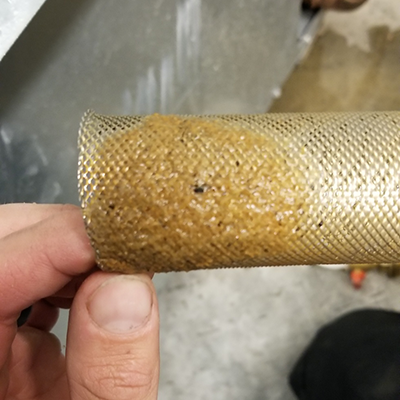
The protective barrier formed by biofilm is hard to penetrate with traditional biocide programs, making it very problematic in systems. Once established, biofilms can cause a multitude of problems including flow restrictions, reduced heat transfer, and microbiologically-influenced corrosion (MIC). These issues can lead to poor heat transfer efficiency, lost production, and even catastrophic equipment failures.
Current Monitoring Methods
Monitoring for microbiological control is an essential part of the water treatment program. Typical monitoring methods like dip slides or laboratory plate cultures only measure the planktonic (free-floating) bacteria in the water sample from the system and not the bacteria growing within the biofilm, which can account for as much as 90% of all microbial activity in a system. The absence of bacteria using these methods does not necessarily indicate that a system does not have a biofouling problem.
Innovations in Microbiological Monitoring
To address the missing link in microbiological monitoring in the water treatment industry, Solenis developed a new biofilm monitor. The bioDART ® is an automatic, real-time monitor that measures the potential of a system to form biofouling deposits. A systems biofouling index (BFI) reading provides a quantitative predictive indicator of its potential to form biofilm that can be used to gauge microbiological control. Sudden spikes or rapid increases in the BFI can be indicators of high levels of biofouling bacteria or changes in system operations. Examples include:
- Offline chillers being brought online
- Upsets in biocide feed
- Mechanical upsets or process leaks (Glycol, process water, other contaminants)
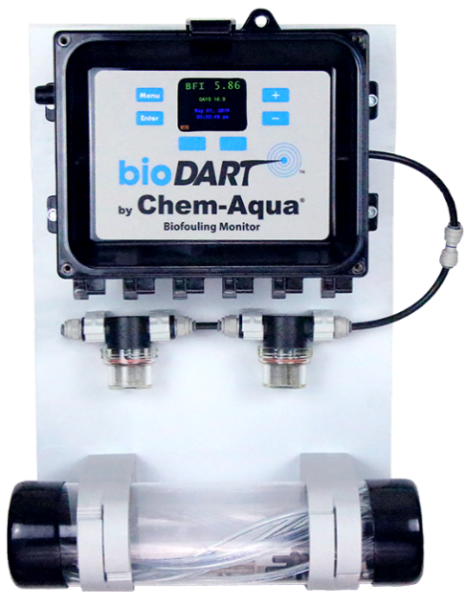
Early warning signs allow Solenis to adjust and adapt the microbiological control program to changes in the system in order to optimize program costs and results.